Featured

The Alien conspiracy begins

What if, at a certain point in our development, we stop being human and start to resemble the hideous monsters from our darkest dreams and cease to resemble anything remotely human?
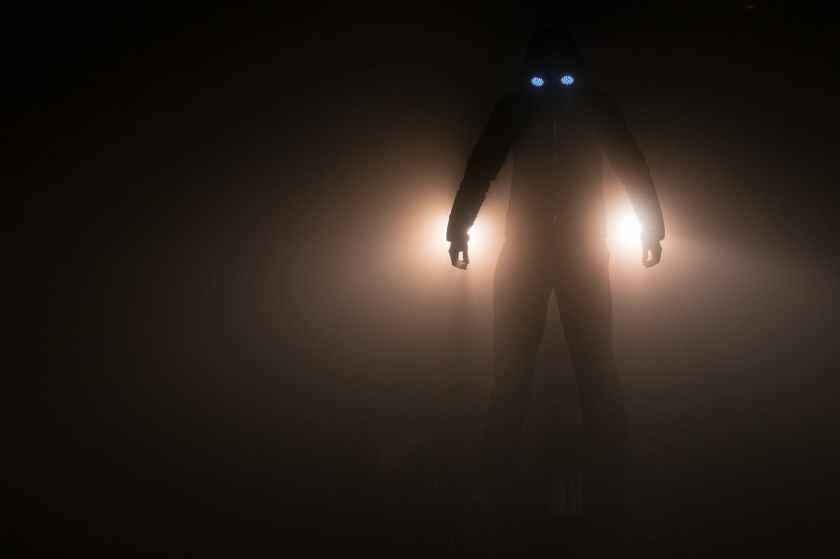
The benevolent or “Christ-like” alien figure of film has a darker side. Not all aliens are like the naïve and adorable Alien “ET” from the early 1980s Steven Spielberg film of the same name. Many of them, as depicted in movies and books, are nasty, mean, and downright unpleasant. Like the irritating friend who abruptly declares, “I’m a vegan,” while you’re grilling steaks for the family barbecue. Hollywood stoked the public’s fear and anxiety toward extraterrestrial visitors through movies with overt and covert plots by aliens to invade, plunder, or conquer Earth. Adding to the public angst, are the stories of people claiming to have been abducted by curious alien visitors.

Close encounters of the third kind and a free colonoscopy!

Imagine the excitement, at the possibility of first contact with alien beings. You then discover, to your horror, that your new alien friends want to extract samples of your skin, probe you with sharp needles, and give you a free involuntary colonoscopy. Maybe authors of science fiction are bringing us back to earth. As a child, I wanted to believe that extra terrestrials might be our human counterparts at a higher evolutionary stage of development. Perhaps aliens, both in fiction and in reports of first contact, embody the darkest aspects of human nature. What if, at a certain point in our development, we stop being human and start to resemble the hideous monsters from our darkest dreams and cease to resemble anything remotely human?

Photo by L. F on Pexels.com

The Martians invade Earth.

The Martian invaders in H.G. Wells, “War of the Worlds” had huge eyes and tentacles, much like giant octopuses or squids. In the novel, the narrator describes how he was gripped by `ungovernable terror’ as he `…stood petrified and staring’ as he caught his first glimpse of the Martian ascending from the cylinder. In the narrator’s words, as he was ` …overcome with disgust and dread’, he paints an unflattering portrait of the Martian invaders.  

“Two large dark-coloured eyes were regarding me steadfastly… There was a mouth under the eyes, the lipless brim of which quivered and panted, and dropped saliva… A lank tentacular appendage gripped the edge of the cylinder, another swayed in the air. Those who have never seen a living Martian can scarcely imagine the strange horror of its appearance. The peculiar V-shaped mouth with its pointed upper lip, the absence of brow ridges, the absence of a chin beneath the wedgelike lower lip, the incessant quivering of this mouth, the Gorgon groups of tentacles…”
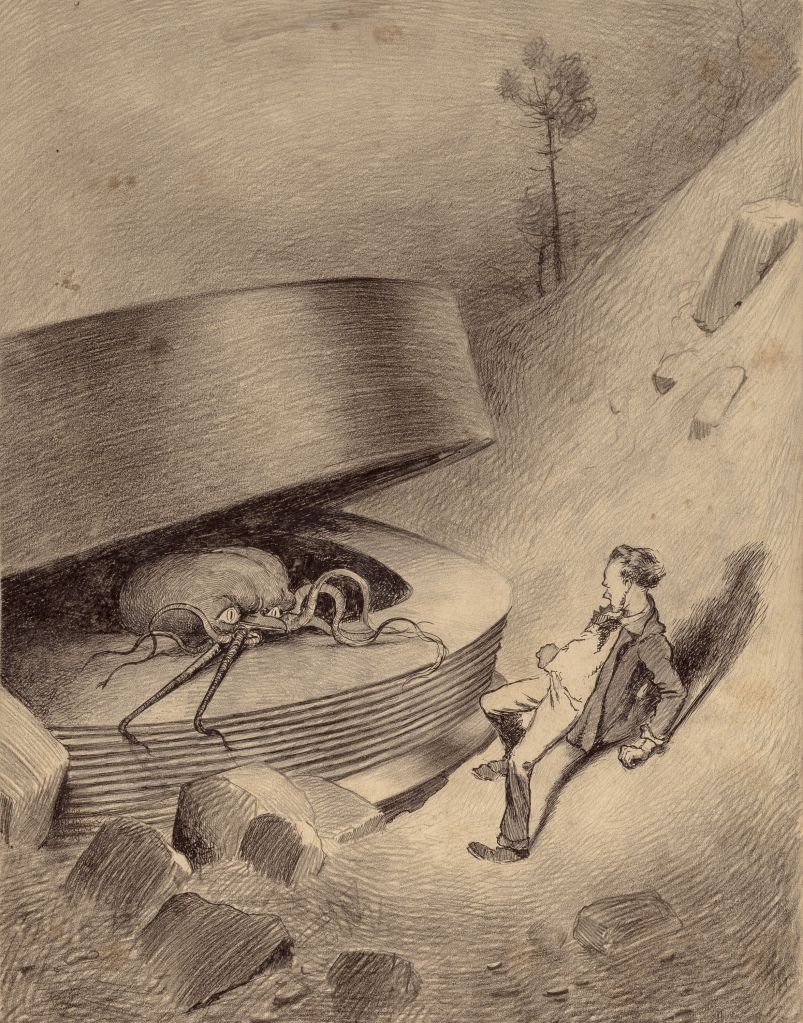
Art work by Henrique Alvim Correa in the public domain.

There is something `otherworldly’ about octopus and squids that inspires the imaginations of scriptwriters and authors. Tentacled aliens have also appeared in Dr. Who, Green Slime, and Invaders from Mars. Some representations of extraterrestrials, such as the alien visitor in “Close Encounters of the Third Kind,” resemble preschool Play-Doh with puny arms and legs. Not exactly a danger to anyone! These guys don’t go to the gym much to “work out.”

The muscular fightback begins.

Photo by Victor Freitas on Pexels.com

In stark contrast to the puny aliens featured in movies was an ad campaign by the Italian American bodybuilder, Charles Atlas. Atlas (or Angelo Siciliano) was a sickly Italian immigrant who became fit through bodybuilding in the early to mid-twentieth century. Atlas is credited for helping to transform the lives of many, particularly young men, through bodybuilding and fitness in the United States.

Atlas promoted a program called `Dynamic Tension’ for bodybuilding. The ad featured a cartoon strip that told the story of the main character, a skinny guy named Mac. Walking along the beach with his girlfriend, a buff, muscular young bully insulted Mac and kicked sand in his face. Mac decides to embrace a weight-lifting program sponsored by Charles Atlas. After transforming his body through weight training, Mac punches the bully and wins the respect of his girlfriend.

As a higher-evolved species, the Aliens probably wised up. Gym memberships are expensive and time-consuming. Why spend hours in the gym when you can incinerate some uppity earth person with a high-intensity laser weapon? On a slightly more cautious note, if Extraterrestrial beings do exist, I really hope there not highly sensitive or easily offended. If they are, I want to offer a public apology on behalf of my fellow citizens of planet Earth. I hope you don’t any of my negative comments personally….you know about resembling octopus…being puny…and other ill-informed words. In earth terms, I’m `less evolved’ and hardly representative of the human race. In fact…I’m thought as ` a bit thick’ to use an Australian colloquial expression ‘between the ears’.

Follow up post: Beware of Aliens bearing gifts.

Featured

The quest for intelligent life: aliens, UFOs, and other strange phenomena

Your choice is simple. Join us and live in peace or pursue your present course and face obliteration.

Photo by Marek Piwnicki on Pexels.com

‘Watch the skies,’ the wise old scientist said in a scene from a 1950s science-fiction film. And I did! As a “cradle Catholic,” my old religious beliefs were overshadowed by a new religion: Unidentified Flying Objects. When I couldn’t make sense of institutional religion, I looked to the heavens in search of extra-terrestrial beings. There was a rise of interest in Aliens, Unidentified Flying Objects, Bigfoot, and paranormal phenomena in the mid-1970s. My sister handed me a copy of Erik Von Daniken’s book “Chariots of the Gods.” The author’s belief that alien creatures had visited Earth and contributed to humanity’s progress was both alluring and (pseudo) scientific.

I wanted to believe that more intelligent life forms existed elsewhere in the far-flung reaches of the universe. Perhaps they benefited from evolutionary processes. To those of us, on the lower rungs of the evolutionary ladder, alien beings with sophisticated technologies would appear to possess `supernatural’ powers beyond our limited understanding. We, Earthlings, would one day ride the crest of the evolutionary wave and eventually learn to coexist peacefully among ourselves and our alien friends. Throughout my childhood, the threat of nuclear war between the Soviet Union and the West was always in the background. There was always the hope of alien intervention. Perhaps they can assist us in fixing some of our planet’s most pressing concerns. A recurring, hopeful theme in many science fiction films.

Science fiction films and post-war anxieties in a nuclear age.

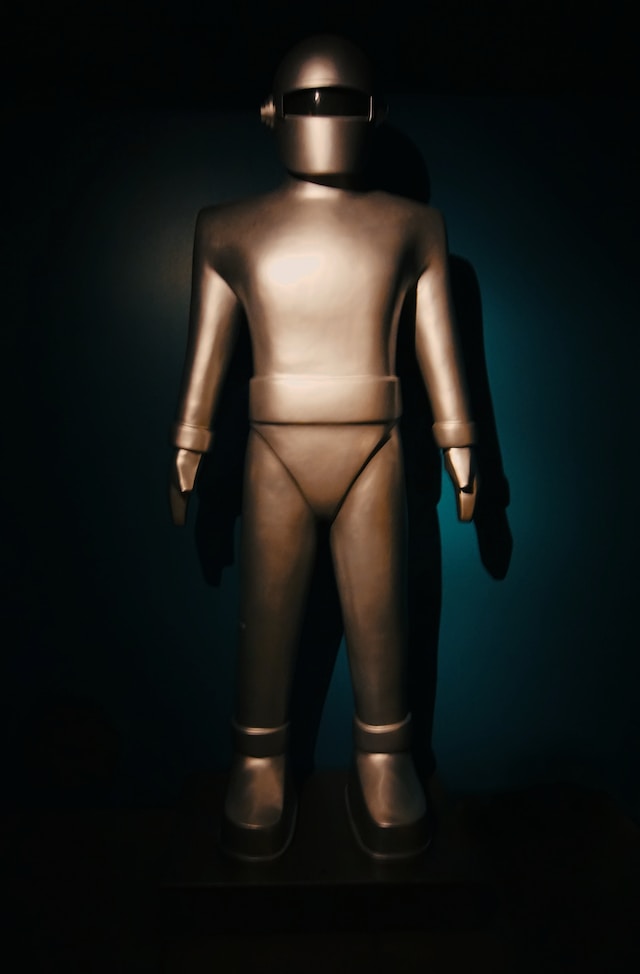
Gort Klaatu Barada Nikto

At the dawn of the nuclear age, one film captured the postwar anxieties of the early 1950s. The plot of ‘The Day the Earth Stood Still’ focused on the arrival of an alien named Klaatu and his robot protector, Gort. Gort descends the flying saucer’s stairway to defend Klaatu after a trigger-happy soldier shoots him in the hand in the opening scene. An intriguing storyline twist is revealed in the closing scene. Klaatu gives a sober warning to the audience of civilians, scientists, clergy, and military. Other races in the cosmos, he claims, are concerned about the human race’s tendency to violence. Klaatu reveals that robots such as Gort patrol the Galaxy, ready to interfere when necessary at the first signs of violence and aggression. To maintain the peace, Klaatu and other aliens have voluntarily become submissive to robots like Gort. In his final words, Klaatu says:

Your choice is simple. Join us and live in peace or pursue your present course and face obliteration.

An unsettling message from one of my favorite sci-fi films. There is an underlying realism. Can humanity ever be trusted to manage our own affairs? Humans are like badly behaved children: we cannot be trusted to govern ourselves and need some `adult supervision’ from a more highly evolved race. During the early eighties, at the height of the peace movement, I remember having a conversation with an older male friend after a Labor party branch meeting. (a Left of centre political party in Australia) The possibility of a nuclear war between the Soviet Union and the United States of America was a topical issue. I clearly remember fretting about the outcome of the 1980 U.S. presidential election. In American terms, I was a liberal and a supporter of the incumbent President, Jimmy Carter. I was disappointed that the Republican candidate, Ronald Reagan won a landslide victory against Carter. As a classic ‘bed wettin liberal’ type, I was almost convinced that Ronald Reagan was trigger happy, like the impulsive soldier that fired at Klaatu. My friend George reassured me that `wiser-heads’ would prevail and the threat of a nuclear Armageddon was over-stated. In 1987, President Reagan negotiated an arms control treaty with the Soviet Leader, Mikhail Gorbachev. What a relief! No more sleepless nights and nightmares of Armageddon. And no need for more `Hollywood style’ alien warnings.

Mr Ronald Reagan, 40th President of the United States of America.

What if the Aliens travelled millions of miles across the galaxy to give us a warning – only to discover we didn’t need their help! Sometimes, we humans get it right! Imagine the Alien ambassador meeting President Reagan at the White House.

Well…gee…it’s quite an honour to finally meet the Ambassador of the National Galactic Council’, President Reagan says in a folksy manner. 

Greetings Earth people. I am Zark. We come in peace. We would like to extend an offer of help. We are concerned about the warlike tendencies of the human race. If you would let us…

President Reagan looks at Ambassador Zark and explains:

`Gee…am…uh… Ambassador Zark…we’re doing fine. I just signed a peace treaty with our longtime enemy…the Soviet Union… If we need your help…we’ll call you.

The belief in aliens or some higher intelligence that can save humanity from a terrible tragedy persists. Even now, the appeal of a ‘Christ’ figure like Klaatu is great. On an instinctual level, perhaps most of us still want for a figure larger than ourselves to intervene and restore peace and harmony to our troubled earth. More like a blunt-spoken John the Baptist, who will push us to abandon our self-centeredness and violence in favour of embracing a larger vision of the possibility of a world at peace. The idea of wiser, more intelligent aliens clashes with another possibility addressed in literature and film. ET is not the only type of alien visitor. Some of them are outright rude, unpleasant and nasty!

Featured

Adventure: Looking for a larger story

Photo by Rijan Hamidovic on Pexels.com

Australia’s iconic Sydney Opera House

One of my earliest childhood recollections is hearing some grownups discussing travel during a family barbecue. One of my aunts had visited Sydney and returned with several mementoes, including photo slides, trinkets and a miniature Sydney Opera house pencil sharpener. I was the awestruck recipient of the Sydney Opera House pencil sharpener. Like a precious jewel or ancient artifact, it was gold- coloured and glistened as I held it up to the sunlight.

An elderly man set down his beer and added, “You see your own country first before travelling overseas,” in a thick, nasal Australian accent. Everyone agreed by nodding. His remarks served as the “last rites” on the subject of international travel. There were entire universes in my head just begging to be explored. His universe was limited to going to the pub. Nobody else at the family gathering dared to depart from the safe and acceptable topics of conversation, which included weather, politics, news, sport and family rumours.

In retrospect, it was simple for me to pass judgement. This generation lived through the Great Depression. Not long after, the Second World War broke out. They had to deal with shortages and lost friends and relatives to war. These were sensible individuals who had cultivated a sense of thrift and valued financial stability. I was uncomfortable with their lack of curiosity and desire to consider alternate ways of understanding the world. I did appreciate hearing tales of the war or wartime escapades; some were humorous, given with a very distinctively Australian, irreverent sense of humour; other tales, however, were tragic, sad or difficult to comprehend. There is something very human within us that yearns to discover or live for a bigger narrative, to be bold and adventurous, or to be willing to give our very self for a greater good.

The beginning of a larger story: the role of organised religion.

Photo by Paolo on Pexels.com

Alternate narratives can be found in the most unexpected locations. I was raised in a Catholic household. Despite the church’s greatest efforts to make faith in God seem uninteresting, there were always some subversive undercurrents that thrived, inspired, and provoked participants within the institution.

The elderly nun who taught us religion one day shared a fascinating tale about Fr. Maximilian Kolbe, a Franciscan priest known as the “saint of Auschwitz death camp,” with us. Franciscan friar Maximilian Kolbe resided in a monastery in Poland. Fr. Kolbe organised a temporary hospital and assisted to offer shelter for 2000 Jewish refugees when the German army invaded Poland in 1939. In the end, the Gestapo detained him for concealing refugees and put him in the Auschwitz concentration camp.

The Auschwitz Deputy Commander issued an order in 1941 to execute ten prisoners in retribution for an attempted escape. One of the men begged for forgiveness since he was a father. The man’s suffering touched Fr Maximilian Kolbe, who offered to step in. The Deputy Commander granted his request, and Fr Maximilian and a few other survivors were ultimately put to death. Some Saints, such as Francis of Assisi and Teresa of Avila, bucked convention and discovered independence inside the established church. They were “Fools for Christ,” living selflessly and bravely for others. These tales had a lasting impact on my life or are still resonating now.

There circumstances where men and women freely and voluntarily sacrifice their life for others in the world today. It takes self-identity to sacrifice out of freedom rather than following some externally imposed view or belief for the sacrifice to have any real meaning. I could not really grasp how to make their example ‘my own’ unless I applied to the priesthood or a religious order. The difference between my everyday existence and the religious ideal was enormous. How was I ever going to close that gap? Feeling disappointed, I gradually turned to another source of “ancient wisdom” – the occult.

Featured

My personal quest for adventure

Photo by Valentin Antonucci on Pexels.com

When I was in my early teenage years, I started looking for adventure because I was feeling restless and discontented. I was always curious and enjoyed learning about new places, which motivated me to venture outside the realm of what I knew.

Adventure as the discovery of the external world.

In my early years, I thought of adventure as exploring the outside world. In
a  scene from the `Temple of Doom’, Indiana Jones’s sidekick, Short Round, asks him a question about the Shankara stones. Indiana Jones provides a concise explanation of his motivation: “Fortune and glory, kid, fortune and glory.” My fortune and glory were a career in politics. I gravitated to journalism. I thought this would be a practical path to a political career.

While journeying through the external world, I could no longer ignore my interior world. Like a lost traveller, I was overcome by what I
saw. I cautiously moved from the outward to the inner world to navigate through my darkness and confusion in the quest to the `treasure’. The treasure as represented by discovering the purpose of my life.   

The quest for adventure: exploring my internal world.

The unconscious is the land of the internal world. I was a reluctant
explorer, but after a period of travelling in India for 3 months during the
early nineties, I returned home to Australia feeling spiritually distraught,
confused and more fearful than ever before. There was something about this trip that touched a raw nerve inside of me. The pain and confusion of self-sabotage behaviour pushed me to go deeper into my inner world and find out what was going on beneath the surface. My India adventure had peeled back the layers to uncover my inner wounds–but it wasn’t all bad news! A whole new world revealed itself to me in greater depth: one that is mysterious and fascinating. A world expressed through the language of dreams, synchronicity and self- awareness.

Finding the hidden treasure or the `gold’ refined in the fires of
adversity.

I looked inward and found the treasure I had been searching for. In the
fires of adversity, I discovered the gold refined through my struggles. The
precious gold that came from the important life lessons and wisdom achieved along the way developed through facing adversity and uncertainty. Adventure is moving out of my comfort zone beyond what I can control and predict. It is being open to new experiences and the willingness to risk failure. Learning to embrace failure without harsh self-judgment was going to be one of my biggest personal challenges.

The next phase of adventure: the entrepreneur’s journey.

After a particularly difficult time in mainstream employment, I was
increasingly drawn to the idea of self-employment. I decided to commit to the entrepreneur’s journey. Like the promise of buried treasure, the dream began to call on me until I could no longer ignore the call. It could be starting a business, following your dreams, starting a family, quitting a job or following your dreams. There are adventures waiting to be discovered in the day- to- day routines of life.


Featured

The Time My Dog Almost Caused a Divorce

We had each lost our sense of self. We each need that autonomy to grow as individuals.

Guest Author Chloe Pearson

I didn’t see it then, but the day I struggled to get off the couch because my dog was sitting on me was the start of my COVID woes, as we call them now. It’s not like she was really holding me down. She’s all of ten pounds. It was that I had let myself go. My back hurts. I was 15 pounds heavier than I’d ever been. My diet was a wreck. I was depressed.

Anyway, I realize now that that was when the irritability began. It was at that moment that I started snapping at my husband for everything, and when we stopped communicating. I wanted to share my story with the Foolish Times blog because I think that we all need to learn to recognize those small moments that change everything.

Let me back up. Before COVID, my husband and I spent every weekend doing something active with our kids. Once they went to bed, we would snuggle, watch movies, and even play the occasional game of Scrabble. Then, out of the blue, everybody was home. All the time. And nobody ever left. So, naturally, we got lazy. I got lazy. While I know that there’s nothing wrong with having the occasional “do nothing” day, I quit running, quit swimming, I quit watching what I ate, and started shoving everything in my face all day long – that was a mistake.

On this day, the kids were playing in the backyard, and I heard them start yelling at each other (red flag number one). My husband and I were on the couch, and I was already annoyed because he was chewing really loud. So I went to get up, and it wasn’t easy. I got mad that he did not immediately jump up to go check on the kids, and I snapped at him by saying, “Do I have to do everything in this house!?” It was the first time I yelled at him, but it wasn’t the last.

Fast-forward. It’s late 2020, he and I had been arguing every day for the last six months, so I called my attorney. She could not see me for nearly four weeks because she was busy. Apparently, we were not the only ones having marital problems. I had also gained more weight, couldn’t get a haircut, and my liquor cabinet was starting to run dry. Looking back, I’m glad that she could not make the appointment because I had another moment that changed my outlook. My youngest asked me why I hated daddy and why I always looked so tired, even though I was sleeping well past breakfast.

I had to make a change, and I started by separating my and my husband’s workspaces so that I could at least have some time during the day when we were not staring at each other. I turned our spare bedroom into my office, and I made sure it was organized and that I put my desk next to the window. That helped. Being on the other side of the house all day felt a little more normal than sharing the sitting room during business hours.

I even started thinking again about starting my own business and what that might look like. I started by brainstorming some ideas in the quiet of my new home office space. Then, I ran a few of them by my husband before landing on one that I wanted to pursue.

Next, I started working out again. I bought leggings – not the cheap “buttery soft” leggings half the women in my neighborhood sell; I needed something more durable that was also comfortable. I also got some new sports bras and a pair of Saucony running shoes (these, for anyone interested).

Our home is in an area with a good walk score, so I started slowly by walking past the closed shops and restaurants. As I gained back my strength and stamina, my walks turned into jogs and then runs. By this time, I could report what businesses were letting people back in and where we might be able to dine outside as a family.

While things were still tense for the next three or so months, I slowly began to regain my energy, and I apologized to my husband for the last year. But, we knew that we needed more than just an apology from me to put things right. He began working on himself as well, so he quit drinking, and all four of us began spending time together again.

As the world began to reopen, he got permission from his employer to go back into the office, and schools finally started taking students back. I think this was huge for the kids because they no longer had to rely on just me and my husband for socialization. After a couple of months, they were more confident and healthier, and were following directions better than ever.

Today, I have lost most of my weight, which has helped me feel better about myself. I’m also meditating every day. My husband quit drinking (and quit eating in the living room!). We have been going to therapy for three months and realize that we love each other very much. Our problem was that we just did not know how to intertwine every moment of our lives together. We had each lost our sense of self. We each need that autonomy to grow as individuals.

While life is still not back to “normal,” I still have my private office, and the kids are not allowed in there. I’m still exercising. And, most importantly, I’ve learned to invest in myself so that I can be a better wife and mom.

Featured

Games Religious People Play: `Fig Leaf’.

Fig leaf is a reference from the story of Adam and Even in the garden of Eden.

The serpent said to the woman, “You won’t surely die, for God knows that in the day you eat it, your eyes will be opened, and you will be like God, knowing good and evil.” (Genesis 3: verses 4-5 WEB translation)

Adam and Eve disobeyed God and ate from the tree of knowledge and Evil. Apart from an awareness of sin, Adam and Eve soon realised that taking advice from a talking snake was a really bad idea. Like many difficult couple relationships, they blamed everyone else for their problems. Eve blamed the snake and Adam blamed Eve for eating the fruit. Sin entered the created world and spoilt everything for humanity. An ongoing tragedy was the proliferation of awful marriage or relationship `self -help’ and `motivational’ sermons and books.

Books with titles like `Seven Keys to a Dynamic Marriage’, `Getting Back Your Sassy Self’ and `Co-dependent No-More’ have been making publishers and relationship gurus filthy rich since the late 20th century. Fig leaf is also a figure of speech. It describes using something that is inadequate as a cover to hide shame and embarrassment. Fig Leaf is also a game. Fig Leaf occurs when well-meaning Christians adopt the latest social issues or programs to gain credibility or popularity with the powerful and the public.

Fig leaf is sometimes very hard to spot. Especially when the cause is good and worthwhile. For example, a church installs solar panels to reduce carbon emissions and `raise awareness of climate change’. The game of `Fig Leaf’ is played when the cause is used as a cover or `Fig Leaf’ to hide their insecurities or unbelief. In the absence of convictions, Christians are tempted to co-opt every passing fad or trend as a `Fig Leaf’. Somewhere along the path of good works, the focus switches from being other centred to `virtue signalling’ or `Look at me…look at me’.

What is virtue signalling?

Virtue signalling is usually described as any communication that involves expressing a moral viewpoint with the aim of demonstrating good character or moral virtue. In the negative sense, `virtue signalling’ is contrived and empty. Virtue signalling can come across as insincere and empty. The focus is on the activist’s self- image with little or no cost or personal sacrifice. In virtue signalling, the signaller’s main aim is to make a positive impression upon their audience. It plays into our desire to look good in the eyes of other people.   

 Humans want to be good.

Regardless of what we believe (or don’t believe), humans have a natural inclination to want to be `good’ or `right’ and seek justification in what we do (or don’t’ do). We are `hard wired’ for striving to attain a standard of virtue or righteousness. In the gap between the ideal and the reality, we always fall short. Simply doing more of the same will never fill the void or satisfy the inner restlessness, insecurities, critical voices and fears. Excessive virtue signalling has been linked to blindness…um…spiritual blindness that is. Using causes as fig leaves blinds us to the reality that we cannot be `good’ or `righteous’ through our own self-efforts.

In a follow up post, I will explore a better game to `Fig Leaf’ and an alternative look at virtue signalling.

Featured

The narrow path: `playing to our strengths’.  

Learning to understand and use our giftedness is one of the guideposts of a life based on grace

It’s Harry’s Birthday. He comes home from work one day and finds a letter in the mailbox. Harry slowly opens the letter and finds a birthday card inside. As he opens the card, a ticket falls out onto the ground. He bends over to pick up the ticket. Harry squints while reading the fine print on the ticket. He says out loud `This is too good to be true!’ The ticket grants the holder `all expenses paid, unlimited overseas travel’ to any location in the world for a period of five years.

Harry’s first excitement at his birthday present starts to give way to some uncomfortable thoughts and feelings. He starts to feel ashamed. Shame is the feeling that suggests `there is something wrong with me…I really don’t deserve an expensive gift like this… I don’t deserve this’. Feeling slightly cynical, Harry thinks to himself `What’s the catch…there’s gotta be catch’.

After a brief pause, Harry puts aside his negative thoughts and receives the birthday present with a feeling of gratitude. He is excited about all the possible places he would like to travel, the tours and adventures that lay waiting for him. Harrys’ good fortune takes an abrupt turn for the worse three days later. He receives an official looking letter in the mail. `Maybe it’s a cheque…a refund or some other good luck’. Harry opens the letter while squinting to read the print. In the letter is an invoice for the travel ticket with a request to pay within 14 days.   

What is grace?

Grace is hard to explain. Looking at the opposite of grace is easier for most of us to understand. The opposite is like getting an invoice for a birthday gift.  A gift is something good we receive with `no strings attached’ and is usually unearned. While the motives for gift giving can be tainted or corrupted, there is an expectation that we don’t have to earn a birthday present. If birthday presents were conditional on our good behaviour, then most of us would be very disappointed around our birthdays. Not all gifts are external. All of us have gifts in the form of hidden abilities, talents or life experiences that have shaped us for the better.

Playing to our strengths.

Strengths based approaches are very popular in the helping professions. Strength based approaches have this view in common: everyone has potential strengths and abilities that are hidden, partly expressed or utilised. People grow and develop when we encourage and help them `play to their strengths’ and not simply define a person by their problems or see them as the problem. We are all `gifted’ in some way or another. Some people are more physically gifted – have stronger, naturally athletic bodies, a razor-sharp intellect or other natural abilities that give them a head start in life.

How grace is expressed: learning to understand and appreciate our abilities, talents and gifts.

Learning to understand and use our giftedness is one of the guideposts of a life that is based on grace. The character of `Harry’ used in the story was born with a strong sense of optimism. While he was not academically smart in the classroom, Harry had a natural ability to learn practical skills in a real-life environment. This gave him a feeling of mastery and confidence in his work and hobbies. He also gained the respect of his extended family and work colleagues. I once spoke to an older man who radiated joy when he talked about his work role. He was the CEO of a training college. He had found a role that was natural fit with his abilities and life experience. He told me that his work was `play’.  His honesty about the challenges and difficulties in his role as CEO gave his story credibility and authenticity.

The expression of grace in our lives.

  1. Think about something you do that comes naturally without much effort or training. (maybe partly realised and not fully expressed)
  2. How is this expressed in your life?
  3. What label would you use to describe these abilities and talents? (you may need to ask another person to help you with this process. We are usually unaware and reluctant to admit our strengths).
Featured

Levels of Play: playing by the rules.

Hard work and getting qualified works for most of us. Some people manage to find work they really enjoy or find meaningful…Rules provide a level of security, predictability and communicate clear expectations around human behaviour.

Play has many layers of depth. `Playing by the Rules’ is the first level of play. It goes like this – get an education, an apprenticeship or a tertiary degree. Those who are lucky enough will get a secure, high paying job or start a successful business. This is the ticket to buying a house, a mortgage and being more attractive to a potential partner. We exchange time, money and energy for financial security, status and the things that money can buy. There are exceptions to the rule. Some people choose singleness as a `lifestyle choice.’ For others, a relationship breakdown, death of a partner or the imbalance between the sexes may mean temporary or long-term singleness through no fault of their own.

Let’s look at a `fictional’ couple called `Jack and Jill’. Jack and Jill climbed the hill of education and secured good jobs. They have a house in the suburbs with a large mortgage, 2 children, a daughter and son (Charlie and Travis) and a dog called ruffles. Jack and Jill will spend most of their lives working to pay off a house (and any other debts). They want to accumulate enough superannuation for a comfortable retirement. Outside of work, Jill really enjoys her weekly yoga class and likes reading self-help, motivational books like `Women Who Swim with the Sharks’, `Fearless Woman’ and `The Power of Me.’ Jack loves his Australian Rules Football, fixing things and is an avid reader of sports magazines. They both love Netflix and renovation shows. Jack and Jill are a `down to earth’, practical couple who are very accepting of other people.

In their retirement, Jack and Jill plan to travel, spend more time on their hobbies and are hoping for grandchildren. Jack and Jill aren’t religious people. Jack thinks churches are full of ` money grubbing-hypocrites’. Jack can put aside his opinions and relate well to people in general. Jill has some vague, fleeting thoughts on the possibility life after death. Jack and Jill are very self- reliant people. If there is no God or certainty beyond this life; then we must strive to look after ourselves and each other. In a universe where God is absent; we are all alone. Like cosmic orphans, we must look to our own efforts to survive through extended family, friends and relying on the state. 

Jack is very popular around the office. He’s very good at fixing things unlike `whiny Simon.’ Jack likes to help his co-workers with their computer problems. He has a practical knack for learning new skills and teaching others. Whiny Simon is usually ‘too busy’ to help other people. He always has time to ‘volunteer’ his opinions about the latest social cause or grievance to his jaded co-workers. Whiny Simon is a humanitarian; an advocate for many a good cause who dislikes people. Shaking his head in dismay, Whiny Simon can’t believe that most people stubbornly cling to their ‘outdated’ and `reactionary’ views that hold back progress. Whiny Simon prides himself on being ‘outspoken’. He loves posting on Facebook to share his thoughts with a broader audience. People usually find excuses to avoid Whiny Simon at work.

Jill is admired by her peers for her calm temperament and ability to make good decisions in stressful situations. Jill’s boss, Steve, nominated her for an `Emerging Leaders’ program at work. Jill struggles with another co-worker, Georgia or ‘Regan’. Georgia was nicknamed Regan after the young female lead character in the movie, `The Exorcist’, who was possessed by a demon. Some of Georgia’s co-workers believe she is possessed by an evil spirit. Georgia’s icy, cold presence causes the room temperature to drop by 10 degrees whenever she enters the office. Ruby the admin officer joked that everyone was waiting for Georgia’s head to rotate around 180 degrees while the demonic spirit openly manifests itself. Georgia resents Jill because she received a promotion for her good work. Georgia can’t understand this. ‘I’ve been in the job for six months…. where’s my promotion?’, she thinks to herself. Georgia feels that she is a victim of a massive systemic injustice.

Playing by the rules has many advantages.

Hard work and getting qualified works for most of us. Some people manage to find work they really enjoy or find meaningful. Jack and Jill have more freedom, comfort and choice over their lives. Rules provide a level of security, predictability and communicate clear expectations around human behaviour. What if Peter, the payroll officer decided to give into his non-conformist playful streak and take 4 weeks holiday leave without going through the formal leave application processes. While Peter is laying on the beach at Bali enjoying the sound of the waves breaking onto the sand, his angry co-workers can’t understand why they were not paid this fortnight. Whiny Simon and Georgia have the time to ride their favourite hobby horses and pursue grievances. For many people who are materially poor, life is a struggle to get the basics and with fewer options. Involuntary poverty is not much fun. People who ‘play by the rules’ can be very resentful of other people who `don’t pull their weight’ or the `work shy’ like their welfare dependent neighbours. Adversity is the great leveller of social status. We are only one accident away from being on a Disability Support Pension.

The downside of playing by the rules: ‘wage slavery.’

There is a downside to exchanging time, money and energy for financial security. The promise of having a `great career’ fades like a desert mirage in the grind of the daily routines of work. The mind-numbing reality of being stuck in a cubicle or open plan office doing repetitive tasks starts to wear thin. Collaboration is difficult when other people have mentally `clocked off’ and have low levels of motivation. Jill would like to find another position to avoid having to work with Georgia. This is not possible for Jill as she cannot afford to take a pay cut. The fear of the loss of financial security keeps many people in a state that feels like ‘wage slavery’. Most people will stay in jobs they have outgrown or dislike. Playing by the rules has another advantage. The ability to buy goods, consume experiences and pursue our pleasures self-medicates us from the mind-numbing reality of routines that become staid and boring. This dovetails with the second level of `play as hedonism’ or the quest for pleasure.

Featured

Space oddity: my failed career as an astronaut. (pt 1)

There were a few obstacles to my dreams of becoming an Astronaut. Reality was a really, really big one

As a child, I developed a very rich imagination. I learnt to withdraw into a creative fantasy life as a way of avoiding difficult, boring and painful circumstances. I remember `feeling different’, an `outsider’ and never quite `fitting in.’ Not an uncommon experience as an adopted child. There are many advantages to having a rich fantasy life. I could escape from the tedium of compulsory singing during school and navigate an imaginary universe. From an early age, I aspired to be an Astronaut. I wanted to travel through space; the ultimate in `disassociating’ from the limits of an earth-based reality and explore beyond the boundaries of the known universe.

There were a few obstacles to my dreams of becoming an Astronaut. Reality was a really, really big one. While patiently biding my time on planet earth, I noticed there weren’t many vacancies for nerdy, insecure prepubescent children at NASA for Astronaut training. I consistently failed primary school maths and struggled to read maps. I was also prone to feeling car sick when travelling. I couldn’t think of anything worse. Struggling to remove my space helmet while having an `out of stomach experience’ and fumbling to find the barf bag. Not a great start for an aspiring space explorer.

Photo by Lavdrim Mustafi on Pexels.com

Space travel is also very, very expensive. In the early seventies, a Saturn V rocket cost around one hundred million dollars. (or one trillion dollars adjusted in today’s currency) That’s a lot of pocket money. (not to mention the postage and handling costs!) Even if I could afford the postage, the sight of a rocket sitting in my backyard would attract the attention of my parents and neighbours. I could imagine my bemused father asking: `What’s that son?’ `It’s a Saturn V rocket, Dad…the type that launched Neil Armstrong and Buzz Aldrin to their first moon landing.’ I imagined my Dad saying in reply, `Alright… don’t tell your mother…she’ll just worry about it.’

The countdown was magnificent…10…9…8…7…6…ignition sequence begins…5…4…3…2 …1…and blast off! The liquid oxygen and kerosene fuelled rocket engines roared into action as huge amounts of fire and smoke poured out of the nozzles. The cabin shook as the rocket slowly accelerated upwards into the clear blue sky. My back arched slightly as the vibrations from the rocket engines firing rattled through the whole structure. The pressure of gravity became stronger as the rocket sped upwards into the higher reaches of the atmosphere. `Looking good Mission control’, I thought to myself. I think my neighbours would have been miffed as their houses were incinerated during the launch. I never like old Mr Jones anyway. He had a flat earth view of reality that could be summed up as `wake up to yourself’, `get a haircut son and don’t march on our streets! ‘Some people’s stance on life is like gravity. Their attitudes exert a strong downward pressure to conform and keep lofty ideals firmly from soaring into the heavens.

My hopes of becoming an Astronaut fizzled like a wet fire cracker. I remember sharing my dreams with my grade four teacher. Her lack of enthusiasm was enough to sow seeds of doubt in my mind. Perhaps she thought to herself `not another one’ or knew that my lack of aptitude for maths would doom me to be grounded on planet earth forever. Reluctantly, I had to compromise my dream of space travel. It was not long after this time that my view of reality would begin to shift. A friend gave me a copy of a book. I discovered the phenomena of Unidentified Flying Objects. If intelligent life was out there cruising the galaxy… then… maybe… they would take me with them!

Featured

Discovering Child-like Joy: Unveiling the Clown’s Universe

If life is a game, then clowns, fools and jesters play a different game.

Clowning is like entering an alternate reality. It started when I enrolled in a summer school clown workshop in Brisbane in 2003. Using a series of activities, the instructor helped us comprehend how truth can be represented via our physical bodies. One of these positions was dubbed “office worker” by him. The teacher asked us to imagine that we had a task to finish. We were instructed to keep little eye contact with the other participants as we moved about the room. The instructor told us to breathe quickly and deeply. I found that the physical posture of an “office worker” is very physically demanding to sustain for extended periods. A strong sense of internal discipline is required. We must force our bodies to `labour’ while being driven by an external goal.

`Emotional labour’ is the phrase that describes the way we discipline our emotions to conform to the workplace. Most front-line positions need employees to deliver “service with a smile.” Front-line employees must manage their true feelings. They need to align their emotional state with the goals and values of the organisation. Emotional labour is the socially acceptable mask we put on to fit in with society. Wearing a mask has certain advantages. A vulnerable person’s faith in the helping professions is damaged when they are treated poorly. A business will likely go bankrupt if its staff is rude or indifferent to customers’ needs. It makes sense to behave in a way that aligns with social norms or business principles. We incur a high cost to internalize the self-control needed to regulate our emotions. I discovered that being an “office worker” for extended periods is very taxing on the body. Not to mention exhausting.

Strolling down the Mall at the end of the day, I sat down to observe people as they were walking. I was in a very relaxed, open, and playful mood. I looked ahead and saw a group of men and women dressed in formal work clothes walking through the Mall.  I felt excitement and joy– an epiphany – ‘they’re in office worker’! This was a transformative moment, a powerful realization that changed my perspective. I wasn’t making any personal judgments about the people walking through the Mall. An ordinary moment yielded a fantastic discovery. It was like watching a performance of street theatre. Like the little child in “The Emperor’s New Clothes,” clowns, fools, and jesters have an “unsophisticated” perception. They “see things as they are” and not how we imagine them.

A clown philosophy

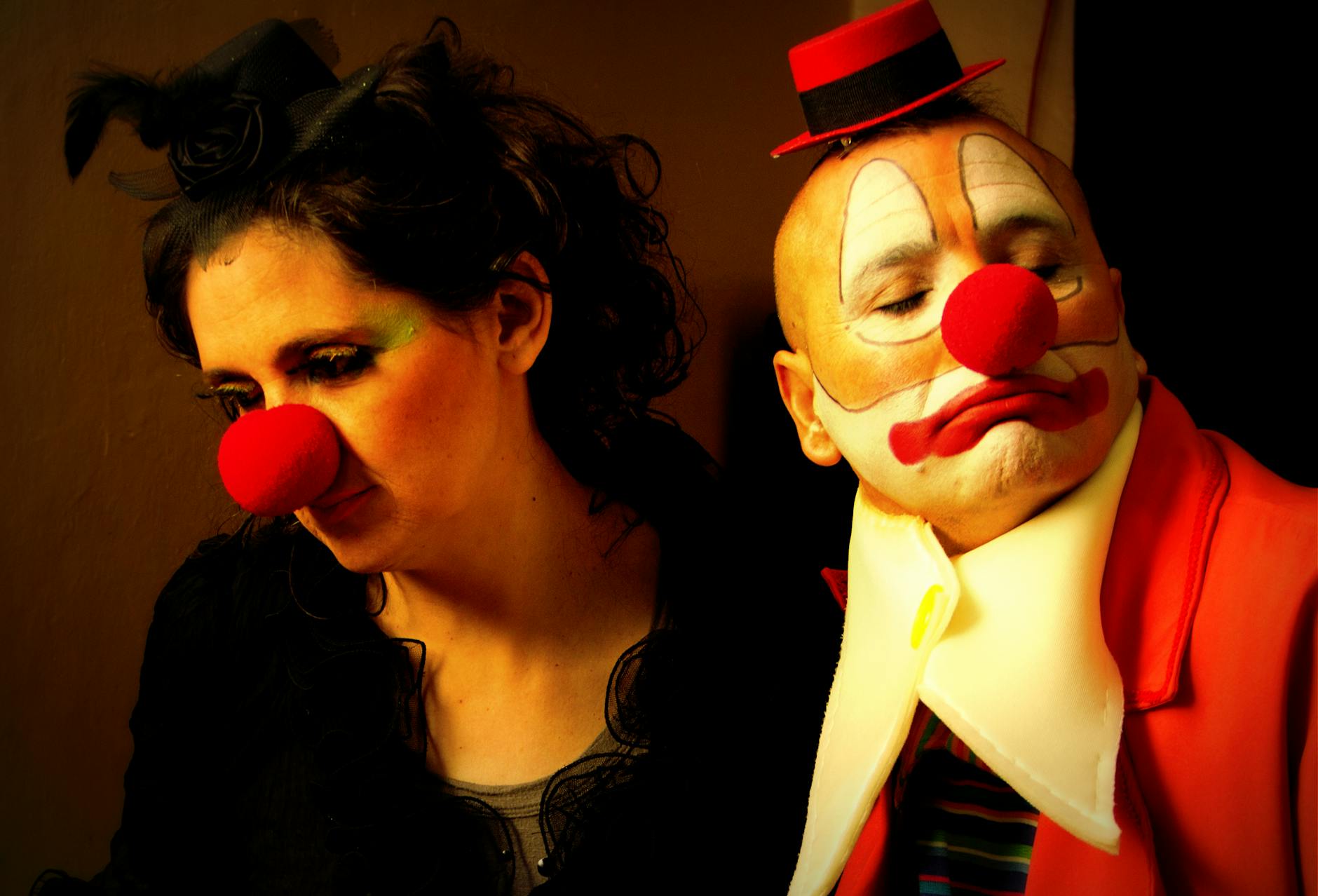
The clown’s red nose is the doorway to an alternative universe. In the clown’s universe, the standard rules of reality are suspended. The energy of the clown is an invitation to freedom. The freedom and joy we experienced as children. The clown is our imaginative, funny, and sometimes disruptive side. “Putting on a character” or “acting” is not what clowning entails. The consciousness arises from astonishment, spontaneity, and childlike wonderment. When we are young, everything seems brand-new and is constantly being discovered and learned. When I was younger, I pretended to have Superman abilities. I draped an ordinary sheet around my neck. Then, I jumped off the roof to soar into the sky. After several grazed knees, I discovered that the law of gravity was “kryptonite” to my fantasy of flying. As grown-ups, we are prone to overthink and create excuses not to be playful. Through the clown, we can rediscover the realm of imagination. In our imagination, anything is possible. It’s never too late for adults to re-experience child-like joy without the bruises!   

In the world and not of the world.

While the clown is vulnerable, the fool or jester is quick-witted and provocative. The Fool or Jester lives alongside the Ruler’s court. Fools exist to deflate or puncture the ego of the King or Queen. They are a living contradiction – `to be in the world and not of the world.’ They use comic humor to soften the blow and say what no one is willing to speak out aloud. They are in the center of power. Still, they rise above the political intrigues of the power structures. This gives the fool enormous power and freedom. In life, the fool unmasks and makes explicit the socially polite games we play that we hide behind.

The ordinary is important

In the clown’s universe, the divine is waiting to be revealed in the day-to-day ordinariness of life. As a general principle of comedy, Fools, clowns, and jesters take the mundane and the ordinary. They pull it apart and elevate it to a higher level. A clown character goes into the bathroom to brush his teeth. He fumbles and loses the toothpaste cap. The clown becomes increasingly frustrated with trying to find the cap  As the audience, we experience his frustration. We laugh at the absurdity of the clown as they try to resolve the problem with ‘clown logic’.  It’s like letting your impulsive, child-like self act freely. You can be joyful without a watchful, critical adult standing over you. Clown logic looks for the most creative, silly and fun path to resolving a challenge. In clown logic, if you are failing, then strive to fail gloriously.

Do more and try harder

In trouble, the clown `doubles down’ by using the same approach with more intensity. This is the `Do More and Try Harder’ approach to life. Meanwhile, the clown is failing gloriously. As a mirror, the clown reflects our absurdities and follies to us. Despite our attempts at being `clever’ or `sophisticated, scratch the surface, and we are all clowns. We have our silly side, our weaknesses, and our vulnerabilities. An ordinary routine has become a story that entertains and provokes. At the moment, the clown disarms our natural defenses with comic absurdity. The clown provokes us to reflect on how we complicate our lives. We keep using the same failed approaches while hoping for a different outcome.

Failure is never the final act

Clowning is a joyous celebration of making mistakes. Clowns fail often. Audiences enjoy watching clown characters fail. Clowns are overwhelmed and never defeated. In the failure and struggle, clowns thrive and show resilience. In clown training, embracing the fear of failure easily translates into ordinary life. The clown invites us to ‘play with our fears’ and enter the ‘scary places’. Clowns, fools and jesters encourage us to let go and accept failure as a normal part of life. The wiser Fool learns from their mistakes. The clown’s innocence and the Jester’s provocation are a gift. They can help us see the obvious, take ourselves less seriously, and play different, more life-giving and enjoyable games. If life is a game, then clowns and jesters play a different game.

Featured

The clowns red nose: a door way to an alternative universe

If life is a game, then clowns, fools and jesters play a different game.

Clowning is like entering an alternative reality. It started when I enrolled in a summer school clown workshop in Brisbane in 2003. Using a series of activities, the instructor helped us comprehend how truth can be represented via our physical bodies. One of these positions was dubbed “office worker” by him. The teacher asked us to imagine that we had a task to finish. We were instructed to maintain little eye contact with the other participants as we moved about the room. The instructor told us to breathe quickly and deeply. I found that the physical posture of an “office worker” is very physically demanding to sustain for extended periods. There is a strong sense of internal discipline required to force our bodies to `labour’ while being driven by an external goal.

`Emotional labour’ is the phrase that describes the way we discipline our emotions to conform to the workplace. Most front-line positions need employees to deliver “service with a smile.” Front-line employees are required to manage their true feelings and align their emotional state with the goals and values of the organisation. Emotional labour is the socially acceptable mask we put on to fit in with society. Wearing a mask has certain advantages. A vulnerable person’s faith in the helping professions is damaged when they are treated poorly. A business will likely go bankrupt if their staff are rude or indifferent to the needs of customers. It makes sense to behave in a way that aligns with social norms or business principles. We incur a high cost to internalise the self-control needed to regulate our emotions. I discovered that “office worker” for extended periods is very taxing on the body. Not to mention exhausting.

Strolling down the Mall at the end of the day, I sat down to observe people as they were walking. I was in a very relaxed, open, and playful mood. I looked ahead and saw a group of men and women dressed in formal work clothes walking through the Mall.  I felt a surge of excitement and joy– an epiphany – ‘they’re in office worker’! This was a transformative moment. I wasn’t making any personal judgments about the people walking through the Mall. An ordinary moment yielded an amazing discovery – a brief moment of ‘street theatre’ in an otherwise ordinary day in the Brisbane City Mall. Like the little child in “The Emperor’s New Clothes,” clowns, fools and jesters possess the “unsophisticated” perception to “see things as they are and now how we imagine them to be.”

A clown philosophy

The clown’s red nose is the doorway to an alternative universe. In the clown’s universe, the normal rules of reality are suspended. The energy of the clown is an invitation to freedom. The freedom and joy we experienced as children. The clown is the imaginative, funny, and sometimes disruptive side of ourselves. “Putting on a character” or “acting” is not what clowning entails. It’s the consciousness that arises from a state of astonishment, spontaneity, and childlike wonderment. When we are young, everything seems brand-new and is always being discovered and learned. When I was younger, I pretended to have superman abilities by draping an ordinary sheet around my neck and jumping off the roof to soar into the sky. After several grazed knees, I discovered that the law of gravity was “krypotonite” to my fantasy of flying. As grown-ups, we are prone to overthink and create excuses not to be playful. Through the clown, we can rediscover the realm of imagination. In our imagination, anything is possible. It’s never too late for adults to re-experience child-like joy without the bruises!   

Lessons from Jean Valjean’s Transformation

Photo by Samuel Regan-Asante on Unsplash

Les Misérables tells the fictional story of Jean Valjean as he struggles for survival in 19th-century France. The tale unfolds against a backdrop of revolution, injustice, and cruelty. Valjean was imprisoned for stealing a loaf of to feed his extended family. He served a total of 19 years for his repeated attempts to escape. Les Misérables reads like a detective story. The reader follows the twists and turns of the main character’s fortunes, Jean Valjean. Traumatised by his life experience, Valjean hardened his heart and became an intensely bitter and cynical man. Upon his release from prison, the streetwise Jean Valjean undergoes a profound transformation, becoming a successful businessman and town mayor. A past crime still haunts Valjean as the dedicated Inspector Javert relentlessly chases him.

Jean Valjean knows that he could be imprisoned for the rest of his life. This could happen if Javert recaptures him and puts him on trial. It’s a great story that continues to resonate since first published in 1862. Most of us live far from the squalor and poverty of 19th-century France. Yet, Les Misérables still speaks to us directly today. His fictional life story challenges us to think about how we respond to unfairness. How can we grasp opportunities? How far are we willing to go to protect the vulnerable or live according to our conscience? By examining the decisions Valjean makes, we can uncover practical insights for our own journeys. This is especially true in how we forgive and take responsibility. It helps us choose forgiveness over revenge when treated unjustly.

Life is hard and difficulty is part of the path.

    Job 5:7 “But man is born to trouble, as the sparks fly upward.”

Jean Valjean was born into a life of poverty and struggle, shaped by societal forces.  The author, Victor Hugo, describes him as an illiterate tree pruner who made his living through physical work. A man familiar with tragedy, he was orphaned from a young age as his mother and father died. He had an older sister who was widowed with seven children. Valjean used his pitiful earnings to support his extended family. As a labourer, his livelihood was dependent on the availability of work. Like many people who sell their labour, Valjean was subject to forces beyond his control. As winter approached, there was no work for him. The spectre of starvation haunted his extended family. It is an unpleasant reality that life is unfair. Some people are born into privilege and inherit, through no work on their part, advantages and financial security. Like many of his contemporaries, Valjean was materially poor with limited options.

Orphanhood is a universal experience.

Valjean was orphaned from an early age. The orphan is the ‘outsider’ – the person who has suffered loss and trauma. Some people are literal orphans, abandoned by their parents/guardians. At other times, people experience a sense of orphanhood. They face rejection from their families or communities due to their differences. Orphans have a strong sense of ‘not belonging’ and alienation from the mainstream. You don’t have to be poverty-stricken to feel like an orphan. Sometimes people are `orphaned’ as their families or communities reject them for being different. The truth is more complex and multidimensional. .

Many people now work in cubicles in open-plan offices. Leg irons and manacles are replaced by surveillance and micro-management. Chained to their desks, alienated from their work and with little control over what they do. Psychology tells us that lack of autonomy over work leads to feeling alienated and can lead to ill health. Increasingly, many people lack work or housing. They are locked out of the economy through no fault of their own. Maybe you’re a male. You are constantly told you live in a male-dominated, patriarchal society. And yet…being male doesn’t give you any benefits or power. You feel powerless. You don’t gain even when men hold the most dominant positions. You are still on the lower rungs of society.

pexels-photo-1411421.jpeg
Photo by Wendelin Jacober on Pexels.com

I was struck by the large number of young men waiting in the queue at Centrelink. (Unemployment insurance in the United States) An older man remarked to me. He said, ‘Many of these guys found a place in the factories.’ Now, many of them are closed down’ He said while pointing to the abandoned buildings now marked by graffiti. These buildings would eventually be taken over to become artists hubs for the trendy middle class. There are also other forms or manifestations of poverty that have negative consequences, like poverty of imagination.

Poverty of imagination. In my professional role as a social worker, I discovered a significant issue. Many people from disadvantaged or marginal backgrounds had ‘poverty of imagination’. The freedom to give ourselves permission to imagine is powerful. Imagination enables us to suspend our current reality and explore the potential of what could be. Freedom invites us to move beyond the circumstances that are within our limited control. The outcome maybe failure or negative consequences—a problematic situation for people with already limited resources. In my personal life, a stunted or impaired imagination can stifle or has stifled my ability. It affects my ability to apply for higher-level, more interesting work. It also impacts my ability to form better relationships or friendships with others. Additionally, it hinders the possibility of becoming an entrepreneur or making a living through writing. As a child from a blue collar background, these ideas seem out of reach. They’re like a mirage where the oasis appears within reach and manages to elude me.

There is hope: orphans are transitional figures.“Even the darkest night will end and the sun will rise.”
― Victor Hugo, Les Misérables

silhouette image of person praying
Photo by Rodolfo Clix on Pexels.com

Orphanhood is not a life sentence. In literature and story, orphans are transitional figures. The orphan figure gives us hope. They remind us of the possibility that we can thrive and grow in hopeless and tragic situations.  Jean Valjean moves from bitterness and hatred to becoming a respected figure. He contributes to his society. He has empathy and understanding for the `Les Misérables’, those with little power, and the downtrodden. In my next post, I will discuss how we can reclaim our experiences of orphanhood. I will also explore how the orphan journey can strengthen us through their wisdom.

You Don’t Have to Fake It: Spotting Imposter Syndrome and Shaking It Off

Guest author, Chloe Pearson, encourages us to step into our freedom and power.

You’ve probably had that moment. You’re surrounded by smart people. Everyone’s talking like they’ve got it all figured out. A small voice in your head whispers, “You shouldn’t be here.” That’s imposter syndrome talking. It doesn’t care how many degrees you’ve earned. It doesn’t care what your résumé says. It doesn’t care how many nights you’ve pulled off the impossible. It sits quietly in the background, chipping away at your confidence, until doubt becomes your default setting. And if you’re not careful, it makes you second-guess the very things you’ve worked the hardest for. But it doesn’t have to be permanent.

When Doubt Becomes Default

Imposter syndrome usually doesn’t shout. It creeps in slowly, almost politely, but once it settles, it starts dictating how you see yourself. You find yourself questioning whether your achievements were due to luck instead of skill. You might also worry that someone’s going to call you out as a fraud. These thoughts aren’t rare, either. Research shows that over 70 percent of people will experience this at some point, and it doesn’t discriminate. People experiencing persistent self-doubt feel inadequate. They report it haunts them even after promotions. It also affects them after big wins. And the cruel irony is, it tends to hit high achievers the hardest.

Get Schooled, Get Stronger

Confidence doesn’t just appear one morning. Sometimes, you’ve got to build it brick by brick, skill by skill. Going back to school can be a direct way to rebuild trust in your abilities. This is especially true when you’ve felt like you’ve hit a ceiling. Whether it’s a single course or a full degree, education lets you get more out of yourself. It sends a strong message to your inner imposter. A business management degree, for instance, can deepen your confidence in leadership, operations, and project management. It also makes you more marketable. And if flexibility matters, you can earn an online degree at your own pace. You can also study wherever you feel most like yourself.

Perfectionism Is a Liar

If you’re a perfectionist, imposter syndrome can have you in a chokehold. It convinces you that unless something is flawless, it doesn’t count. That mindset turns every tiny mistake into a catastrophe and every success into an accident. It’s not ambition, it’s self-sabotage in disguise. People with overly high expectations for themselves often burn out before they give themselves permission to feel proud. They over-prepare, over-apologize, and overcompensate until exhaustion becomes a badge of honor. If you don’t learn to let go of the impossible standard, you will struggle with imposter syndrome. It will stick around like it pays rent.

You’re Not Them, You’re You

Scrolling through social media can feel like walking into a hall of mirrors. Listening to a colleague list their wins can feel the same. Comparison is a dangerous game because you’re playing with made-up rules. Everyone’s timeline is different, yet imposter syndrome convinces you you’re falling behind. What you don’t see are the insecurities and detours other people hide just as well as you do. Learning to stop comparing yourself to others is one of the hardest habits to break. Yet, it’s also one of the most important. Once you do, you’ll start to notice your own growth—without the background noise.

Talk Back to the Voice

That inner critic? It’s not all-knowing. Sometimes it’s just a collection of old fears in a new outfit. Reframing those negative thoughts doesn’t mean pretending you’re the best at everything—it means giving yourself permission to be good enough. Instead of thinking, “I have no idea what I’m doing,” try, “I’m learning something new every day.” You can interrupt the loop by replacing it with positive affirmations, even if they feel clunky at first. Eventually, your brain catches on that maybe, just maybe, you’re not faking anything at all.

Change the Way You Think About Failing

There’s freedom in not needing to be the expert all the time. People who develop a growth mindset know that mistakes aren’t dead ends, they’re detours. Once you allow yourself to learn through failure, you begin to remove shame from the process. Suddenly, it’s not about proving yourself anymore, it’s about improving. That’s a big shift. And it’s often the very thing that untangles you from the trap of imposter syndrome.

Let People In

This part’s uncomfortable, especially if you’re used to pretending everything’s fine. But pretending gets lonely, fast. Sharing your feelings with mentors, peers, or therapists can be beneficial. The act of naming the fear often robs it of its power. Community doesn’t solve imposter syndrome entirely, but it keeps you grounded in truth. You’re not alone, and you never were. Let someone remind you of that when you forget.

There’s no certificate or speech that makes imposter syndrome disappear forever. It lingers because it’s tied to how we’ve been taught to measure worth—by output, by applause, by comparison. But that’s never been the full story. Your presence, your work, your wins, they’re all yours, whether or not your brain wants to admit it. The only way out is through, with practice, patience, and enough reminders that you’re not just pretending. You’re participating.

Dive into the whimsical world of Foolish Times where adventure, humor, and the mysteries of the universe collide. Explore captivating stories and insights that challenge the ordinary and ignite your imagination!

The Importance of Timing in Life Decisions

Part 2 Maximizing Kairos opportunities: embracing risk.

elderly man posing for the camera
Photo by Alena Darmel on Pexels.com

A no-risk approach is the biggest risk of them all.

Hearing a speaker talk about the `pain of regret’ hit me like lightning! To try anything new is to embrace some level of risk. Regret is a negative feeling of self-condemnation for lost opportunities. It is sorrow for what has been. It can also be the wish to undo past choices. Many people have significant regrets about avoiding trying anything new or risking failure. The discomfort from making mistakes is minor compared to the pain of stagnation and the lament for missed opportunities. Instead, I would look `foolish’ in my first awkward attempts and failures rather than live with the pain of regret. Choose your pain!

Negative feelings: a trigger for self-reflection and a course correction.

Being open to new experiences invites the possibility of negative ones (including failure.)  Negative experiences are part of the journey. The temptation is to retreat or bail out altogether. We will also listen to the negative or siren-like voices that would shipwreck our dreams and goals. On my first trip to India, I was excited about the possibilities. The challenges of navigating different cultures, eating, and the inevitable case of `Delhi Belly.’ Managing to navigate a culture when I was feeling ill was an awful experience. I felt the dreadful sensation of `dry retching’ while hunched over the toilet ball. My stomach continued experiencing vomit-like sensations. There was nothing left inside of me! My India trip helped to catalyse my interests, likes, and dislikes. I had a moment of laser-like clarity. I realized that what I was chasing was in Australia and not overseas.

Risk is the pathway to adventure.

Embracing risk opens possibilities for the adventures that Kairos moments bring. Some of our most interesting moments come from risk-taking. This is learning a new skill. It involves talking to a stranger. It can also mean daring to voice an opinion or applying for a new job. These moments are life-enhancing, transformative, and rewarding. They are the content of exciting stories and the memories we savour and look back upon. The joys of victory, the defeat, and the lessons that have been learned along the way. An older man looked at me and said: Youth aims to collect memories and experiences. We enjoy them in our old age.

Knowing our level of risk.

I have great admiration for people who are high-level risk-takers. The individuals you often read about are the ones who start businesses. They explore hard-to-reach geographical places. They also make bold financial decisions. Our culture and media glorify these risk-takers who have made it. Still, it’s crucial to remember that not all risks lead to success. Real-life stories of failed entrepreneurs who risked everything remind us of the long-term consequences. Some of them now live on the streets. It’s important to carefully assess the level of risk you are willing to accept. Some risks can take much longer to recover from.

Defusing Conflict: Lessons from the Christmas Truce 1914 (part 2)

stained glass in a church
Photo by cottonbro studio on Pexels.com

Part 2: Avoid demonizing the enemy.

In a situation of conflict over needs, it’s all too easy to move to a default view. We often see the worst in other people. We look at others through a distorted lens while suppressing, downplaying, or minimizing our faults and flaws. Spiritual blindness leads to hatred and contempt for the other person (or group). We need to exercise sober judgment to see ourselves and others clearly. As Jesus Christ said, ‘… take the log out of your eyes. Then, you can remove the speck from your neighbour’. In his short teaching, Jesus challenged us. He urged us to acknowledge our tendency to judge others harshly. We often judge others harshly for the same behaviours within ourselves. This process of self-reflection is a powerful tool for promoting understanding. It allows us to see beyond our first perceptions, fostering empathy and open-mindedness in conflict situations.

For over 12 years, I worked in the criminal justice system to help rehabilitate youth and adult offenders.  Someone asked me: ‘How do you do it… work with criminals?’ I responded…’I’m not that much different.’ I understand that I have the potential for my own tendency towards crime or anti-social behaviour. This work has been a journey of personal growth for me. You hear the stories of the guys `doing time.’ They share the choices they made and the risks they took. You listen to the pathways that led them through decisions. You start to understand how easy it is to commit criminal acts. Then, you add other layers. The lack of opportunities and disadvantages. Add to this bad choices and a peer culture that celebrates or affirms offending.

Taking a risk.

After the first banter and carol singing, some soldiers left the trenches. They offered friendship to the opposing side. Sometimes, we must leave our trenches or fortified opinions long enough to risk meeting with the ‘enemy.’ It takes courage or chutzpah to take the first step. In the short term, staying comfortable with the familiar is more effortless. We find safe territory by taking refuge in our fixed positions, judgments, opinions, beliefs, and ideologies. The risks include confusion, uncertainty, and giving up fixed ideas. Yet, through these risks, we open ourselves to the potential for personal growth and transformation by engaging with differing perspectives. Disliking or hating someone when you are closer to them is more challenging. There was no guarantee their gestures would not be seen as a threat. Their gestures could have been met with gunfire or an attack. In the records, some soldiers were killed during this time. Yet, many took a calculated risk. They informed the opposing side. Then, they walked out onto the battlefield. They wanted to offer a hand or make a gesture of friendship.This act of understanding, of trying to see the other side, is a powerful lesson in empathy.

Find common ground.

An essential factor that made peaceful relations possible in the war of 1914 was a shared story. This story was grounded in a European Christian heritage. Shared rituals created a temporary climate of peace. People put up Christmas trees, exchanged gifts, and sang carols. One German soldier noted, “You are the same religion as we. Today is the day of peace”. Finding areas of agreement can help build trust and reasons to work together. Extended conflict is draining, wastes time and energy, and produces little or nothing of value.

Defusing Conflict: Lessons from the Christmas Truce 1914

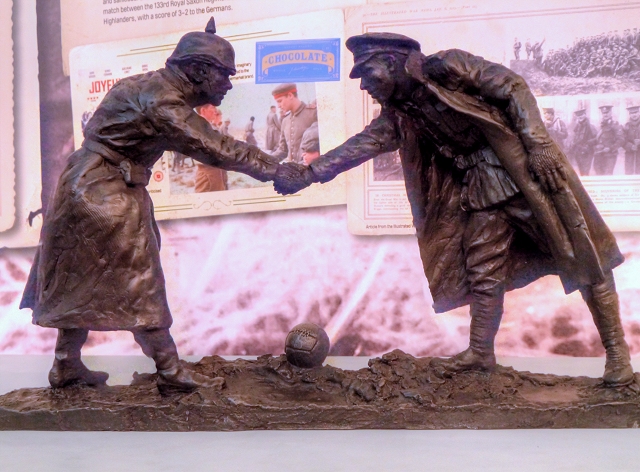
National Football Museum, All Together Now by Andrew Edwards
National Football Museum, All Together Now by Andrew Edwards by David Dixon is licensed under CC-BY-SA 2.0

Christmas is a magical time of year. Traditionally, Christmas was a time to reflect on the birth of the saviour, Jesus Christ. For many Australians, spending time with family and friends and enjoying food is the main reason for Christmas. Around the world, Christmas is celebrated by the religious, non-religious and irreligious alike. Whatever the reason, Christmas inspires many of us to be kinder and more joyful. Family tensions are put aside long enough to come together around Christmas dinner. Did someone sneakily sprinkle fairy dust that leads to a change in behaviour? Christmas can also bring out the very worst in people. Some Christmas gatherings are more like trench warfare. Where passive-aggressive sniping and verbal hand grenades are thrown into the conversation. All this served with a side order of indigestion and seething resentment. Whatever the reason, outbreaks of peace and goodwill are possible.

The Christmas truce of 1914

An outbreak of ‘peace and goodwill’ occurred along the Western Front during the first World War. On Dec 7th, 1914, Pope Benedict XV (15th) asked for an official truce. The Pope pleaded with the warring powers. He wished that “…the guns may fall silent at least upon the night the angels sang.” His appeal for peace was ignored. Since the start of the war, Allied and German soldiers had been fighting for 5 months. Thousands of men had been died (including civilians during the German invasion of Belgium). The armies on both sides were now bogged down in trench warfare. In some places, the trenches were no more 30 metres apart. As the Christmas season approached, the weather became cooler and frost appeared on the ground. For soldiers on both sides, this was their first Christmas away from family and friends. Kaiser Wilheim wanted to boost the morale of the German army. He had thousands of Christmas trees sent to the front. If the Kaiser had foreseen the impact of this gesture, he may have had second thoughts.

Silent Night: an outbreak of peace and goodwill

As Christmas Eve approached, an unusual silence descended over the battlefield. German soldiers placed Christmas trees and candles on the edges of the trenches. While German soldiers sang Silent Night and proclaimed ‘Christ the saviour is born’, something unusual happened. The trenches were so close that British soldiers heard the Germans singing Christmas carols. Some British soldiers clapped with enthusiasm in response. Allied soldiers responded singing Christmas carols of their own. Soldiers on both sides had some light-hearted banter with their enemy. The Germans shouted `Happy Christmas’ across the trenches to their enemy.  

An agreement was reached to meet in the middle of the battlefield. As trust grew, soldiers from opposing sides, slowly and cautiously, left their trenches. They swapped gifts, drank alcohol, shared family photos, and sang carols together. Some German soldiers offered barrels of beer to contribute to the party. The beer had been ‘liberated’ from a French brewery. Tribal loyalties to their respective nations divided the men. Still, they all agreed that French beer was truly awful. In a joint funeral service, British and German soldiers recited Psalm 23. They said, “The Lord is my Shepherd” to honour their fallen comrades. The truce worked so well that it was extended until Boxing Day. For a moment, soldiers from either side could celebrate. They no longer feared being shot or killed. The ideal of the universal brotherhood of man was realised. What can we learn from the Christmas of 1914 that could make our lives more peaceful?

Conflict and the clash of needs.

Conflict occurs when there is a clash of unmet desires or needs. Conflict can be helpful. Good conflict helps to air grievances and complaints. It allows each other to be heard. It also involves setting ground rules to avoid abusive behaviour. Conflict becomes a problem when parties use manipulation or force. On a larger scale, conflict escalates and leads to war, mass killing, sexual violence, exploitation and genocide. To avoid harmful conflict, we need to listen to our needs. We must also learn to listen to the unmet needs of other people.

Defusing conflict: finding common ground and the role of empathy.

Expressing our own needs and hearing the needs of others creates common ground. In a space free of harsh judgments, blame, scapegoating and fixed opinions, common ground and mutual empathy is possible. Empathy is not to be confused with sentimentality or not having boundaries. Real empathy is the ability to make sense of another person’s behaviour by looking  at their situation. This doesn’t imply that we must always agree to meet the other person’s needs.

Defusing conflict with a teenage neighbour

While working from home, a teenage neighbour was playing loud music. I was feeling very irritated, unable to think or concentrate. My need was to have time to concentrate. I put myself in the situation of my teenage neighbour. As a teenager, playing music was one of the ways that I expressed my growing independence and self-expression. I fiercely resented adults trying to impose their will on me. In the short term, using force will lead to conformity. It creates simmering resentment. It doesn’t allow for a conversation that engages the other party in the possibility of cooperation. I walked over to the fence and calmly said ‘Hello’. I explained to him that I was working from home and struggling to concentrate due to the music. I said: ‘I don’t want to stop you from playing your music and having a good time.’ I asked him to lower the volume for the next 2 hours. I needed that time to finish my work. He agreed and I had 2 hours to concentrate and finish my work.

Part 2: Avoid demonizing the enemy.

Resource

1. Nonviolent Communication: A Language of Life: Life-Changing Tools for Healthy Relationships: Vol. 3rd edition – Marshall B. Rosenberg, PhD & Deepak Chopra

Is Your Anxiety Affecting Your Child? Clues to Look For and Practical Steps Forward

Photo by Freepik

Guest Author Chloe Pearson

As a parent, you naturally want the best for your child. Nonetheless, sometimes your own anxiety can inadvertently affect their well-being. You need to understand how your stress impacts your family. Learn ways to manage it. This can create a healthier environment for everyone involved.

Understanding Anxiety’s Impact on Family Dynamics

To effectively support your child’s well-being, it’s crucial to educate yourself about anxiety and its effects on family life. Recognizing that anxiety is not only a personal struggle. It is also a familial one. This understanding can help you find out how your own stress does influence your child. By managing your own anxiety, you give a positive example for your child. You show that anxiety is a normal part of life. It is something that can be managed. This proactive approach not only aids in reducing your child’s anxiety but also fosters a healthier family environment overall.

Your Anxiety and Your Child’s Well-being

Understanding how your anxiety affects your child is crucial for their emotional and behavioral health. Research indicates that parental anxiety can significantly increase the risk of children developing emotional and behavioral issues. Interestingly, while parental anxiety is linked to children’s internalizing problems, it does not necessarily correlate with externalizing behaviors. Your anxiety does not directly cause your child to act out. Yet, it can deeply affect their emotions. It can still deeply impact their emotional state. By acknowledging this connection, you can take proactive steps to manage your anxiety.

Create Stability Through Consistent Routines

Establishing consistent routines is crucial in providing children with a sense of security and predictability. By setting specific times for daily activities, you help your child feel more secure and manage their expectations effectively. This approach not only fosters a sense of organization and stability. It also aids in developing self-discipline. Children learn to handle their responsibilities independently. Moreover, adding transition periods between activities can ease the shift from one task to another. For instance, a calming reading session before bedtime makes the routine smoother.

Identifying Common signs

Recognizing anxiety in both yourself and your child is crucial for fostering a supportive environment. Look for signs such as excessive worry, irritability, or changes in sleep patterns in both you and your child. By acknowledging these symptoms, you can take proactive steps to manage anxiety. Practice relaxation techniques together, like deep breathing exercises. This shared approach not only helps in reducing anxiety. It also strengthens the bond between you and your child. This creates a more reassuring atmosphere at home.

Boost Your Career Prospects to Alleviate Job-Induced Anxiety

Your job might be causing you stress and anxiety. If it is, consider advancing your career to improve your mental health. Pursuing further education can open doors to better opportunities, offering not only financial benefits but also improved work-life balance. For example, if you work in nursing and want better working conditions, shifts, and pay, explore nurse practitioner online programs. These programs can position you for a more hands-on approach. You can also see improved pay and hours. Regardless of your career track, online degree programs make it easier to handle parenting and work duties more easily.

Seek Out Calming Family Activities

Engaging in calming family activities can foster stronger connections and give everyone a mental break from daily stressors. Try family yoga, weekend nature walks, or cooking together. These activities can create shared moments of relaxation. They allow both parents and children to unwind in each other’s company. Simple routines like reading bedtime stories can give security. Playing music and having a weekly game night foster togetherness. These activities not only help children feel grounded and supported. They also allow parents to reconnect and shift their focus away from anxious thoughts. This reinforces positive family bonds and enhances emotional resilience for everyone involved.

When It’s Time for Professional Help

Recognizing when to seek professional help is crucial. It is essential for managing how parental anxiety affects a child’s well-being. If a parent notices that their anxiety consistently interferes with family routines, it creates persistent stress in the household. This stress also affects their child’s emotional or behavioral health. At this point, it is time to consult a mental health professional. Therapy or counseling can offer both parents and children the tools they need to cope more effectively. A therapist can help parents explore the root of their anxiety. They can learn strategies to prevent it from affecting their child. The therapist also provides a safe space for children to express any concerns they are internalizing.


Identify and handle your own anxiety. This can significantly improve your child’s emotional health. It also helps create a more harmonious family life. Through education, routine, and proactive management, you can foster a supportive environment where you and your child can thrive.


Dive into the whimsical world of
Foolish Times where adventure, humor, and the mysteries of the universe collide. Explore captivating stories and insights that challenge the ordinary and ignite your imagination!

The Importance of Timing in Life Decisions

Life presents us with fleeting moments of opportunity, and it is essential to seize them to succeed. Have you ever wished you made wiser decisions and fully embraced these opportunities? Understanding the nuances of time is vital, as not all time is of equal value. Taking decisive action at the right time is the difference between triumph and failure. Shakespeare eloquently expressed this idea in Julius Caesar: “There is a tide in the affairs of men. Taken at the flood, it leads on to fortune.” Time is a finite resource. Many people are left feeling regretful for the missed opportunities. Recognizing the different values of time—beyond our usual measures—opens the door to a new realm of possibilities. Yet, countless individuals hold back from this potential out of fear and hesitation. Don’t let fear stop you from stepping into the adventure that awaits!

The call: opportunity knocks.

Many years ago, I was feeling stifled. I was stagnating at work. I had exhausted the possibilities within my current role. I had grown in my love of research. I was drawn to academia. I struggled to take this side of myself seriously. The possibility of working for a major university was like a mirage. An older friend showed me a job advertisement for the position of Senior Research Assistant at a major University. She looked at me and said: “I can see you in this position”. Life often calls us to step outside of the ordinary. It can be an opportunity or a person that inspires this change.

My uncertainties, justifications, and reasons for inaction quickly dissolved. What once appeared impossible, improbable, and merely a fragment of my imagination transformed into a possible reality. I swiftly compiled my application and resume and then awaited a response from the University. A profound sense of inner assurance enveloped me, leading me to believe this opportunity was destined for me. I recalled the story of the prophet Moses from the book of Exodus. Moses stood at the edge of the Red Sea, with the Israelite people watching anxiously. The armies of Pharaoh advanced rapidly in their chariots bearing down on the Israelites. There was no way of escape. In an extraordinary moment, Moses prayed to Yahweh. The waters of the Red Sea parted. The Israelites crossed the Red Sea safely to the other side. Shortly after the interview, I received a phone call on the same day confirming that the position was mine.

My Red Sea moment: Chronos and Kairos time.

Understanding the difference between Chronos and Kairos time has helped me make better decisions. Time is an important resource. Not all time is of equal value. Chronos or clock time is linear. We measure time by calendars and schedules. Chronos time is helpful when the need is to achieve tasks efficiently. Calculating the time it takes to drive my children to activities helps me to juggle multiple responsibilities. Chronos time helps me to organize myself around the daily routines that build a structure for Kairos opportunities to emerge. Turning up to work on time, completing tasks, and meeting Key Performance Indicators are examples of Chronos time. Adhering to Chronos time provides a salary. It offers benefits like annual (and paternity) leave. It provides an income that contributes to family expenses.

A Kairos moment is the most opportune or `right time’ to act for maximum impact. As the writer of Ecclesiastes observed, ‘There is a time for everything.’ There is a season for every activity under the heavens. Kairos time is a `felt moment.’ Words used to describe Kairos time include `rich’, `suspended in time’ or `seasonal’. Surfers and athletes use words like `peak experience’ or `being in the zone’ to describe Kairos time. Kairos has a seasonal aspect. Like farmers, there are times to sow and to reap to boost a good harvest. Kairos has the sense of being lifted ‘out of the ordinary business of life’ into a different quality of life. Embracing Kairos time improves our quality of life and happiness.

Maximizing Kairos opportunities: adopting a mindset of acceptance.

Kairos moments arise when we let go of the belief that we are at the center of our universe. The notion of being ‘…the master of my fate…and… the captain of my soul’ is poetic. Still, it can also feel overwhelming. Many elements are beyond our control. If you are indeed the master of your fate, you bear the full burden of the outcome. The simplistic viewpoint of `It’s all me…my efforts…my achievements…’ offers no space for other perspectives. What happens in the face of failure? External circumstances can derail or hinder our aspirations and objectives. It’s possible to experience losses in finances, business, or career opportunities due to economic fluctuations, health complications, or other variables. I once met an entrepreneur who ran a thriving computer company. That business failed after the terrorist attacks on the World Trade Center on 09/11/2001. There is no journey without risk or the chance of failure. Far worse than failing to meet our goals is the agony of regret. The path of adventure is found in embracing a mindset of openness and acceptance of whatever happens.

Part 2. Maximising Kairos opportunities: embracing risk.

Beware of Aliens bearing gifts!

In one of my favourite TV series of the 1980’s, ‘V’, humanoid alien visitors arrive on earth to ask for our help. In return, their leader, John, promises to share the benefits of their advanced technology with humanity. The ‘Visitors’ are predatory reptilian creatures disguised as humans. The Visitors are scheming to plunder Earth’s resources while salivating over using humanity as a food source. In one scene, the resistance movement takes over a public event at the Los Angeles Medical Centre where the alien leader is about to announce a cure for cancer. The resistance seize control of the medical centre. The resistance leader, Julie Parrish, rips John’s mask off to reveal his true reptilian nature and says defiantly:

 “The visitors are not our friends…they’ve come to rape our planet and kills us…they are not who they appear to be…’’ she says defiantly to the astonished guests.

While ‘V’ was a ripping good yarn, the underlying premise was interesting. Usually, for evil to succeed, it masks itself or comes disguised as something good and beneficial. I had a similar experience at a party many years ago. After talking with a stranger, he looked at me intensely. The kind of hypnotic stare that snakes give while they slowly circle their prey. Nervously, while making small talk, I said: 

“I want to travel…go back to India…see a few other places I haven’t been’’.

He moved slowly closer to me and without blinking responded.

“Sounds great…you’ll need a big income to fund your dreams’’.

Looking at me with a reptilian stare, he paused and added…Have you heard of `the plan?’

Feeling I was unable to escape, he talked about “sharing the plan” with me. I’ve had previous ‘close encounters’ with people who wanted to share “the plan” and the dream of “financial freedom”. This was another introduction to multi-level- marketing (or MLM) or Pyramid schemes. MLM schemes make money by recruiting people into the ‘business’. People who rise to the top of the pyramid benefit financially from the people at the bottom who buy motivational resources. As a friend said to me “Same old story…they sell the dream of financial freedom through money”. I had a close friend who was ‘seduced’ by the allure of a well-known MLM scheme.

After a robust or strongly worded discussion with the friend who had become ‘possessed’, he stated to my disbelief that you could not fail. Financial freedom is guaranteed if you apply the principles and methods of the “business”. If you work hard enough, you will reap the rewards of financial freedom. If you don’t achieve financial freedom, then it’s your fault. In a cruel twist, the apprentice is blamed if they don’t succeed. The plan is a form of technology that enslaves the willing participant. And plays upon our dreams or desires for a better life. The lie has a power of it’s own. It’s a spiritual force that beguiles or seduces people who want to believe there is a guaranteed formula to make money. Fortunately, the host interrupted the conversation. I had an excuse to leave before he could get his fangs into me.

First contact and a few jokes to break the ice.

If Aliens possess the technology to travel over vast distances of the galaxy, then why don’t they have a highly sophisticated sense of humour! None of the reported close encounters with aliens are funny or even mildly amusing. Aliens, in fiction or stories of close encounters, are usually depicted as highly intelligent or evolved. Humour, according to research, is an indicator of high intelligence.

You would think that a technologically advanced alien race would be very witty. Intellectually, we are like ‘small children’ compared to our more advanced space travellers. Surely it wouldn’t take too much to make us laugh. For a species that are obviously superior and advanced, a few self-deprecatory comments would really build some rapport. I mean, making fun of yourself, is one of the easiest ways of building rapport and putting people at ease.

Some unwanted advice or ‘mansplaining’ to our alien friends.

If my dentist or Doctor can crack a few lame jokes, surely it’s not too much to ask our Alien visitors for a few jokes while they’re abducting people for further study. If Aliens were serious about making a connection with earthlings, then a few jokes or witty comments wouldn’t go astray. At least on earth, we usually offer someone an alcoholic drink or a hot beverage as social lubricant or ice breaker when getting to know people. And another thing. Many abductees tell horrifying or really scary stories of aliens taking skin tissue or organ samples. I really don’t get it? What do they do want with all the human tissue samples? Are they trying to build a human being out of spare parts? How about some empathy? On earth, we don’t kidnap people against their will, strap them to a table and examine, poke and prod them with needles and suction devices. We have consent laws on this planet!

Outer space or closer to home?

Not all the researchers of UFO phenomena believe view that a race of technologically advanced beings have been making visits to our planet. Bucking the conventional explanation, French astronomer, Dr Jacque Vallee put forward the ‘multidimensional visitation hypothesis’. Dr Vallee theorized that extraterrestrials were not visitors from outer space but spirit-like beings from other dimensions beyond our time and space. Like ghosts, visit undetected while co-existing with humanity. Nonetheless, explanations in the realm of the ‘paranormal’ are usually dismissed or excluded as a possibility.

Calling occupants of interplanetary craft

After many frustrated and unsuccessful attempts to communicate telepathically with alien beings, I became resigned to living on planet Earth. Maybe it was a way of channelling my emerging adolescent energy into something bigger than my own day to day concerns. While I was too scared to talk to members of the opposite sex, I was not afraid of making a close encounter of the third kind with alien beings. This was less intimidating…even in the face of scary testimonials of abductees being experimented on, taken aboard a flying saucer and being subject to strange and unusual medical examinations.  Nothing compared to the sheer terror of trying to make small talk with a member of the opposite sex…who…may as well have been aliens as they were a complete mystery to me. After reading some disturbing accounts of close encounters, perhaps, I was lucky not to have my wishes fulfilled.  

The lure of occult mysteries

mystic woman with candles and divination cards
Photo by Mikhail Nilov on Pexels.com

There was a natural progression and overlap with the occult as I sought to uncover the hidden mysteries of the universe. Like many searchers, I put these ideas on a pedestal to worship, admire and organise my life around. After many unsuccessful attempts to communicate telepathically with aliens, I moved deeper into investigating occult practices. The occult held out or had the promise and potential of exercising more personal power to effect change in the circumstances of my life.  The promise of more personal power or self-efficacy is the same the catalyst that motivates me to embrace the entrepreneurs journey.

Next blog post: A prophecy in ‘Babylon’.

Failure: Life as a tragicomedy

Comedy gives way to tragedy when someone refuses to learn from their mistakes. Tragedy is watching some repeat the same mistakes while expecting a different outcome.  

Photo by Capotina Entretenimientos on Pexels.com

Audiences love and enjoy the silliness and absurdity of the clown character. “Clown logic” as a clown tutor said, is the character doing the same thing repeatedly to the point of absurdity”. The clown’s failures by their very nature are a mirror image of our comical attempts at life. Clowning can help us face difficult truths, free us from unnecessary suffering, and allow us to embrace creativity and playfulness. 

The dark side of the fool

The clown or fool’s optimism, playfulness, and innocence have a dark side. Innocence and simplicity are delightful in children. In adults, being ‘simple’ can lead to disastrous consequences. The simple fool is open to any passing impulse, thought, or fad. Simple fools have an oversimplified view of the world. They fail to understand the cause and effect sequences that affect every area of their life. Clowns are like this. A pair of clowns are walking past a hospital and hear a call for a surgeon over the PA system. One clown looks to the other and says: “I could do that.” They decide to put on a white coat and a mask. The clowns then play hospital. The simple fool lacks discernment. They have the ability to sift right from wrong. They can also judge shades of grey when making good decisions. The clown or fool embodies optimism, playfulness, and innocence, but these traits come with a darker side. While innocence and simplicity can be charming in children, in adults, being overly ‘simple’ can lead to disastrous consequences. Simple fools are easily influenced by any passing impulse, thought, or fad, resulting in an oversimplified world view. They often fail to grasp the cause-and-effect relationships that impact various aspects of their lives.

Consider a pair of clowns walking past a hospital. They hear a call for a surgeon over the PA system. One clown turns to the other and says, “I could do that! Let’s put on a white coat and mask and pretend to be doctors.” This shows how the simple fool lacks discernment. They lack the ability to evaluate and judge right from wrong. They also fail to recognize shades of gray when making decisions.

 The tragic side of failure

To attempt or try anything new or different is take the risk of making mistakes.  Some mistakes are much harder to recover and have longer-term consequences.  Playfulness, spontaneity, and a live-for-the-moment philosophy can lead to impulsive decision-making without the thought of long-term consequences. Comedy gives way to tragedy when someone refuses to learn from their mistakes. Tragedy is watching some repeat the same mistakes while expecting a different outcome.  

Reclaiming our foolishness.

We can ‘play the Fool’ or be ‘played by the Fool’. Linguistic distinctions are important. A foolish person lacks judgment. They make poor decisions. Such people often repeat the same mistakes without changing or reflecting upon their behaviour. The disowned fool manifests in repetitive and tragic behaviour. You’ve observed someone at work or in another setting. They seem to be incapable of learning. They fumble their way through making one mistake after another. As an onlooker, their attempts resemble comedy of tragic dimensions. Some psychologists classify this behaviour as a form of narcissism. A narcissist has an inflated view of themselves, verging on grandiosity. A person ‘played by the fool’ resists any attempts to learn from others and refuses to accept help or assistance.

The wise Fool as an ally in the game of life

Acknowledging our “self-deception” is essential for becoming a wise fool. Some honest and painful self-reflection is necessary. It helps in understanding the behaviour patterns that keep us stuck in the tragicomedy of life.